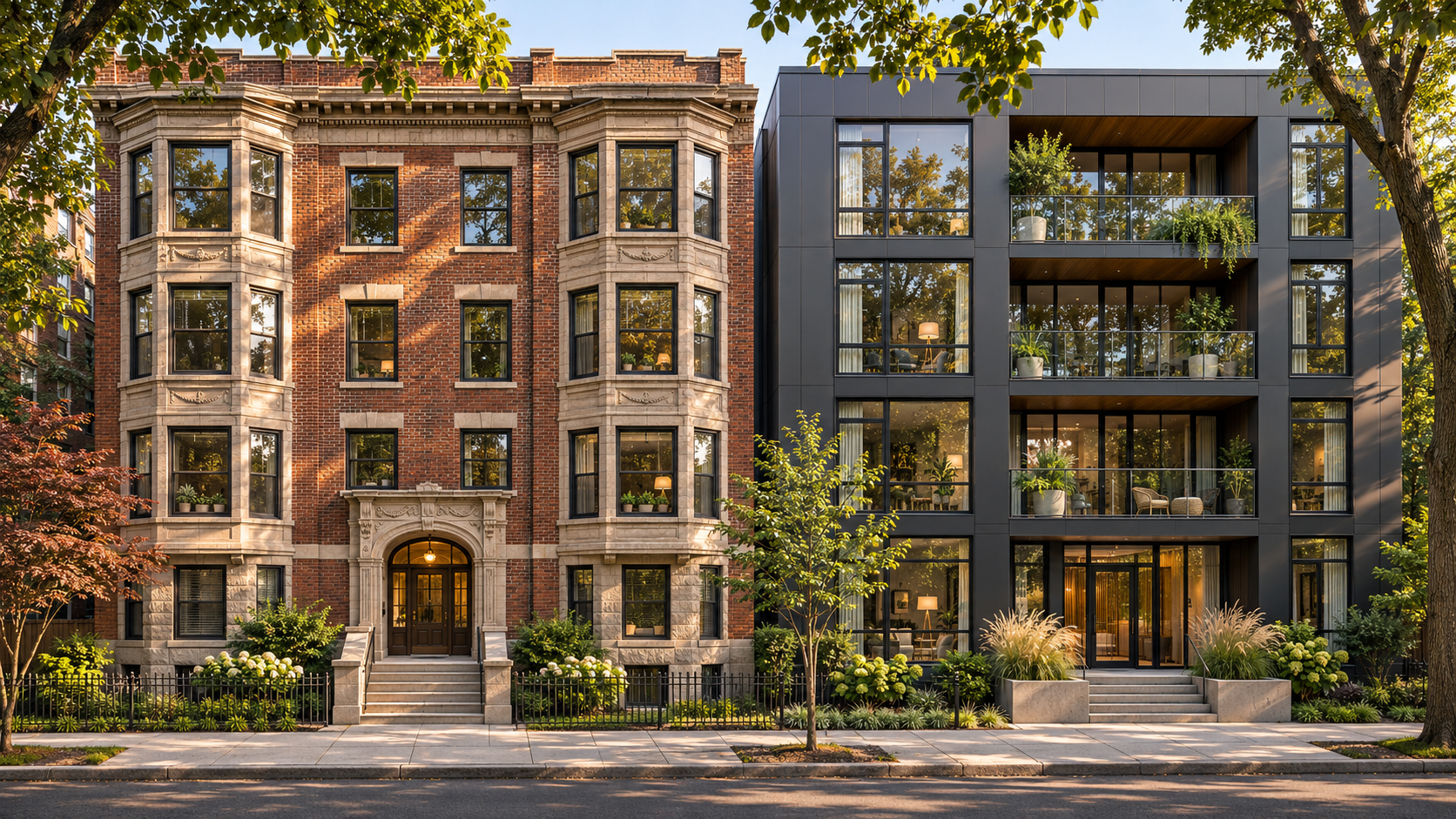
So, what is a good cap rate? For most rental properties it lands somewhere between 5% and 10%. Expensive, fast-growing cities sit at the low end. Cheaper towns and older buildings sit at the high end, because buyers want more income for taking on more risk.
That range is the answer you'll find everywhere. It leaves out the part that matters most in late 2026: with mortgage rates above 7%, a cap rate can look fine on paper and still lose money once you borrow. Below you'll get the usual ranges, a way to check a seller's number, and one duplex worked from listing to loan so you can see exactly where a "good" cap rate stops being good.
What is a good cap rate? The short version
Here's how investors usually read a cap rate on a residential rental:
Cap rate | What it usually means |
|---|---|
Under 5% | A pricey, stable area. You're paying for safety and betting on appreciation, not income. |
5% to 7% | The normal range for decent rentals in most metro areas. |
7% to 10% | Strong income, usually with more work, an older building or a weaker location. |
Over 10% | Either a real bargain or a problem you haven't found yet. Look harder. |
No number on that table is good or bad by itself. A 4.5% cap rate in a neighborhood where rents climb every year can beat a 10% cap rate in a town that's losing jobs. The cap rate tells you what the property earns today. It says nothing about what happens next.
What is a good cap rate for rental property?
A good cap rate for rental property is one that pays you fairly for the risk you're taking on that specific building. These rough rules of thumb are a starting point, not survey data:
Newer single-family home in a growing suburb: 4% to 6%. Low upkeep, steady tenants, thin income.
Small multifamily (2 to 4 units) in a mid-size city: 6% to 8%. More rent per dollar, more turnover and repairs.
Older home or duplex in a slow-growth town: 8% to 10%. Good income, but roofs, furnaces and vacancies eat into it.
Rough area or a building that needs work: 10% and up. The high number is the market pricing in the hassle.
The real benchmark is local. Before you call a deal good, find what similar properties nearby actually sold for and work out their cap rates. If your target is a full point higher than its neighbors, ask why.
How to calculate cap rate
The formula fits on one line:
Cap rate = net operating income ÷ purchase price
Net operating income (NOI) is the rent you actually collect in a year, minus the costs of running the property. It leaves out your mortgage payment, which is why the cap rate lets you compare two buildings no matter how each one is financed. If any of these terms are new, the real estate dictionary has plain definitions.
The catch is the NOI. The formula is easy. Getting honest numbers into it is where most investors go wrong.
Why the listing cap rate is usually too high
Sellers and their agents tend to quote a cap rate built on full rent and only the bills they can't hide. Here's an example duplex listed at $320,000, with each unit renting for $1,450 a month ($34,800 a year).
Line | Listing | Realistic |
|---|---|---|
Gross rent | $34,800 | $34,800 |
Vacancy (5%) | $0 | $1,740 |
Rent collected | $34,800 | $33,060 |
Property management (8%) | $0 | $2,645 |
Repairs (5% of rent) | $0 | $1,740 |
Capital reserves (5% of rent) | $0 | $1,740 |
Property taxes | $3,800 | $3,800 |
Insurance | $1,600 | $1,600 |
Water, sewer and trash | $0 | $1,200 |
Net operating income | $29,400 | $20,335 |
Cap rate | 9.2% | 6.4% |
Same building, same rent. The listing says 9.2%. With vacancy, management and money set aside for the next roof, it's 6.4%. That gap is common, and it's one of the easiest ways for a first-time buyer to overpay.
Your own percentages will differ. If you'll manage the property yourself, you can drop the management line, but your time still has a cost. Don't drop the reserves. Every building eventually needs a roof, a water heater and new flooring, and the reserve line is how you pay for them without a credit card.
Does the cap rate beat your loan?
This is the test most cap rate guides skip, and it decides whether a deal pays you or costs you.
Freddie Mac's weekly survey put the average 30-year fixed rate at 7.28% for the week of November 19, 2026, up from 6.26% a year earlier (Freddie Mac Primary Mortgage Market Survey). That average tracks home loans for buyers with strong credit and 20% down. Investment property loans usually cost more, so this example assumes 7.75%.
Say you buy the duplex with 25% down ($80,000) and borrow $240,000 for 30 years at 7.75%:
The monthly payment is $1,719, or $20,633 a year.
The realistic NOI is $20,335.
Cash flow is $20,335 minus $20,633, which is minus $298 a year, before closing costs.
A 6.4% cap rate felt solid. Financed at today's rates, the property loses a little money every year, and you're relying on rent growth or appreciation to come out ahead.
The break-even cap rate
There's a quick way to see this before you run every number. Divide the yearly loan payment by the loan amount. That's the loan constant: here, $20,633 ÷ $240,000 = 8.6%. Multiply it by the share of the price you're borrowing:
Break-even cap rate = loan constant × loan-to-value = 8.6% × 75% = 6.45%
Any cap rate below 6.45% on this loan means negative cash flow. To actually earn more on your down payment than you would paying cash, the cap rate has to beat the full loan constant of 8.6%. Investors call that positive leverage, and at today's rates it's rare outside cheaper markets.
Rates change the picture fast. At 6.25%, the same duplex would clear about $2,600 a year. At 6.75%, about $1,650. So when you ask whether a cap rate is good, ask it with your actual loan quote in hand.
Compare it with the 10-year Treasury
A cap rate is a yield, so it helps to hold it up against a yield with no tenants attached. CBRE reported that the 10-year Treasury hovered near 4.6% in mid-July 2026.
A 5% cap rate is only about 0.4 points more than that bond, and the bond never calls you about a leak. A 7% cap rate pays you about 2.4 points for vacancies, repairs and the months it takes to sell a building. How big a gap you need is a personal call, but if the spread is tiny, the deal only works if the property gains value.
What is a good cap rate for commercial real estate?
Commercial cap rates follow the same logic, with bigger swings between property types. CBRE's U.S. Cap Rate Survey for the first half of 2026 pooled about 3,600 estimates across more than 50 markets and found the all-property average about flat (CBRE U.S. Cap Rate Survey H1 2026). Neighborhood retail saw the most compression, followed by hotels and industrial. Office had the widest spread of estimates, a sign of how far apart the best buildings and the struggling ones have drifted.
In practice, that means apartment buildings and warehouses usually trade at the lower cap rates, retail in the middle, and office higher, with older offices far higher. Within each type, class A buildings usually carry lower cap rates than class B and C.
One thing to watch: commercial leases often make the tenant pay taxes, insurance and upkeep. A 6% cap rate on a building where the tenant pays everything is very different from 6% where you do, so check what's inside the NOI before you compare.
There's no single average cap rate
You'll see an "average cap rate" quoted for the whole country, but it's too broad to price a deal. It blends Manhattan office towers with Ohio duplexes.
The number that matters is the average cap rate for your property type in your neighborhood. To find it, pull three to five recent sales of similar buildings nearby, estimate their NOI the same honest way you did for your target, and divide by each sale price. In Revanse you can ask the AI agent to show comparable sales near an address and explain which ones are most relevant (see how property research works). Our free investor tools help with the rest of the math.
Frequently asked questions
Is a 7% cap rate good?
For a stable rental in most US metros, yes, 7% is a solid number. Whether it's a good deal depends on your loan. With the example loan above, the break-even cap rate was 6.45%, so 7% would cash flow a little. It wouldn't reach the 8.6% needed for positive leverage.
Is a high cap rate good?
A high cap rate means more income for every dollar you pay, which is good. It also usually means more risk: an older building, a weaker area or tenants who move often. Treat anything over 10% as a reason to inspect closely, not a reason to rush.
Is a 5% cap rate too low?
Not in an expensive, fast-growing market, where 5% can be normal. But with mortgage rates above 7%, a 5% property bought with a typical loan will almost certainly lose money each month. It makes sense mainly for buyers paying cash or betting on appreciation.
Does the cap rate include the mortgage?
No. Cap rate leaves out financing on purpose, so you can compare properties fairly. To see what you'll actually earn on your cash, look at cash flow after the loan payment and your cash-on-cash return.
Bottom line
A good cap rate for most rentals is 5% to 10%, and the right number depends on where the property is and how much work it needs. Before you trust any cap rate, rebuild the NOI with vacancy, management and reserves, then check it against your break-even cap rate at the rate you'll actually pay. If it clears both tests, you have a deal worth a closer look.
When you're ready to run the numbers on a real property and keep tracking it after you buy, you can create a Revanse account and keep rent, expenses and cash flow for each property in one place (see portfolio tracking).